
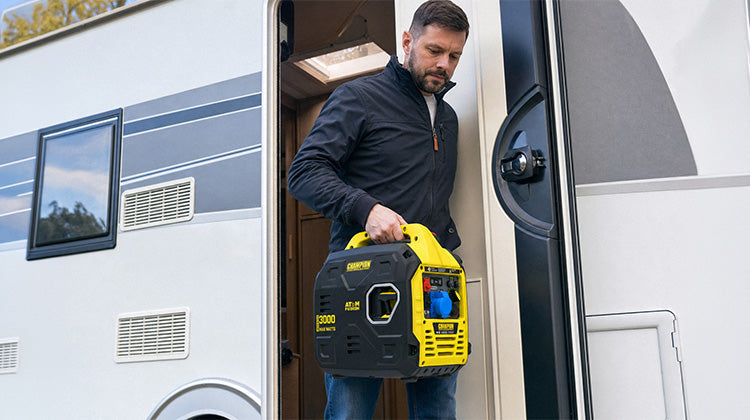
At a glance: choosing a quiet generator for your motorhome
- A compact inverter generator is a strong starting point for motorhome power, combining lower noise with easy transport and controlled electrical output.
- Work out your wattage before choosing a generator. Kettles, microwaves, fridges and other appliances can quickly increase the load.
- Check the stated noise level in dBA and the distance it was measured from so you can compare generators fairly.
- Petrol works well for portable motorhome power, while dual-fuel gives you the choice of petrol or LPG.
- Check campsite rules before using a generator, including any restrictions on operating hours, noise or fuel.
If you’re searching for the best silent generator for a motorhome in the UK, what you’re really looking for is a generator that keeps noise as low as practical while still delivering enough power.
For many motorhome setups, that points towards a compact petrol or dual-fuel inverter generator. You get portable power, controlled electrical output for electronics and a machine that’s easier to transport and store than a larger conventional generator.
The right choice comes down to your appliances, storage space, fuel preference and where you plan to use it.
What type of generator is best for a motorhome?
An inverter generator is often the strongest fit for motorhome use.
Unlike a conventional generator, an inverter model electronically processes its electrical output. This gives you controlled power suited to equipment such as laptops and TVs.
Many inverter generators can adjust engine speed as demand changes, helping to reduce noise and fuel use when you're not drawing the full output.
Portability is another advantage. You're carrying the generator alongside everything else you need for a trip, so a compact model that's easy to lift and store can make a noticeable difference.
Once you know how much power you need, compare generators by size, fuel type, noise level and portability to find the best fit for your motorhome.
How quiet should a motorhome generator be?
Generator noise is normally stated in decibels, or dBA, but the number only means something when you know how it was measured.
Always check the distance at which the figure was measured. A generator rated at 58 dBA at seven metres can't be fairly compared with another generator measured from a different distance or under different test conditions.
For example, our 2,200W Mighty Atom and 3,000W Atom Fusion petrol inverter generators are both rated at 58 dBA at seven metres.
Noise isn't the only consideration, though. A very quiet generator that can't comfortably run your equipment isn't the right generator for the job.
How much generator power does a motorhome need?
Start with the appliances and equipment you actually plan to run.
Depending on your setup, that might include:
- Fridge or freezer
- Lighting
- TV
- Laptop chargers
- Kettle
- Microwave
- Water pump
- Other electrical appliances
Add up the running wattage of anything you’ll use at the same time. Then check for additional starting wattage, particularly with equipment that uses motors or compressors.
Before choosing an output, work out the generator size you need from your actual electrical load. This helps you avoid carrying a larger generator than necessary or choosing one that struggles with your appliances.
Is a petrol generator good for a motorhome?
A petrol generator can be a practical option when you want portable power for trips away.
Choosing dual-fuel doesn't necessarily mean giving up the portability or quieter operation you want for motorhome use. As an example, Our 2,200W Mighty Atom provides 1,900 running watts, weighs 17.6kg and is rated at 58 dBA at seven metres.
If your setup needs more power, moving up in output doesn't necessarily mean accepting a much noisier machine. The 3,000W Atom Fusion provides 2,800 rated watts while retaining the same stated 58 dBA noise level at seven metres and weighs 21.5kg.
Those figures show why it's worth comparing power, weight and noise together, rather than focusing on one specification.
Is a dual-fuel generator better for a motorhome?
A dual-fuel generator is worth considering if you'd like the choice of petrol or LPG.
That flexibility can be useful when travelling, particularly if LPG already forms part of your motorhome setup. LPG generators have a range of benefits over petrol including lower emissions and lower maintenance costs.
Compact dual-fuel inverter models don't necessarily mean compromising heavily on portability or noise. The dual-fuel Mighty Atom, for example, weighs 17.9kg and is rated at 58 dBA at seven metres. It provides 1,900 rated watts on petrol and 1,710 watts on LPG.
That difference in output is important. Always check the rated wattage for the fuel you intend to use, as some dual-fuel generators produce less power on LPG than petrol.
What size generator is best for a motorhome?
A smaller inverter generator may be enough if you’re mainly charging devices, running lighting and powering a few lower-demand appliances.
If you want to run a kettle, microwave or several appliances together, calculate the combined load more carefully.
Use rated or running wattage when assessing normal operation rather than choosing on maximum wattage alone.
It’s also worth deciding what genuinely needs to run at the same time. Managing your electrical load can allow you to choose a smaller, lighter generator without losing access to the appliances you need.
What features should you look for?
Once you know the output you need, focus on the features that make the generator easier to live with on the road.
Low noise
Check the dBA rating and measurement distance. Remember that generator noise can also change with electrical load.
Low weight
Think about how often you’ll lift the generator in and out of storage. Even a relatively small difference in weight becomes noticeable when you’re moving it regularly.
Inverter technology
If you’ll power electronics such as laptops and TVs, an inverter generator gives you controlled electrical output designed with this type of equipment in mind.
Useful runtime
Check how long the generator can run and the load used for the stated runtime. A runtime measured at 25% load won't necessarily reflect what you'll get when running several appliances.
The right connections
Check the sockets and outputs against the equipment and electrical setup you intend to use. Portable generators don’t all provide the same connections.
Can you use a diesel generator for a motorhome?
You can, but diesel wouldn’t typically be our first choice for a typical touring setup.
Diesel generators are generally better suited to heavier loads and longer periods of operation.
For most portable motorhome power requirements, the lower weight and compact dimensions of a petrol or dual-fuel inverter generator make more practical sense.
If you have unusually high power requirements or expect sustained generator use, diesel may still be worth considering. For typical portable motorhome power, we'd start by looking at petrol and dual-fuel inverter options.
Can you use a generator on a UK campsite?
Don't assume that owning a quiet generator means you'll be allowed to use it everywhere.
Campsite rules vary. Some sites may restrict generators completely, while others may set permitted hours, noise requirements or rules around particular fuels.
Check the rules for the campsite you’re heading too before arrival, especially if the generator is essential to your setup.
Remember the people around you too. Even a relatively quiet generator can become intrusive if it runs close to neighbouring pitches for long periods.
Where should you put a generator when using a motorhome?
A portable generator must never be run inside your motorhome, awning, garage area or another enclosed or partially enclosed space.
Generators produce carbon monoxide (CO), a poisonous gas that you can't see or smell. Always operate the generator outdoors and follow the manufacturer's instructions for positioning, clearances and ventilation. Exhaust should be directed away from people and occupied spaces.
Never compromise safe positioning simply to make the generator less audible from your pitch.
Motorhome generator buying checklist
Before choosing a generator, check:
- The running wattage of your appliances
- Any additional starting wattage
- Which appliances you'll use together
- Rated generator output
- Noise level and measurement distance
- Generator weight and dimensions
- Petrol or dual-fuel operation
- Runtime at a realistic load
- Socket and connection requirements
- Available storage space
- Rules at the campsites you use
The best motorhome generator isn’t simply the quietest. It’s the one that gives you enough power without adding more noise, weight or bulk than your setup needs.
Need help choosing a quiet generator for your motorhome?
Start with your wattage, then compare noise, weight and fuel choice.
If you’re not sure which generator will give you the right balance on the road, use our chat system to work through your power requirements and narrow down the right options.


