
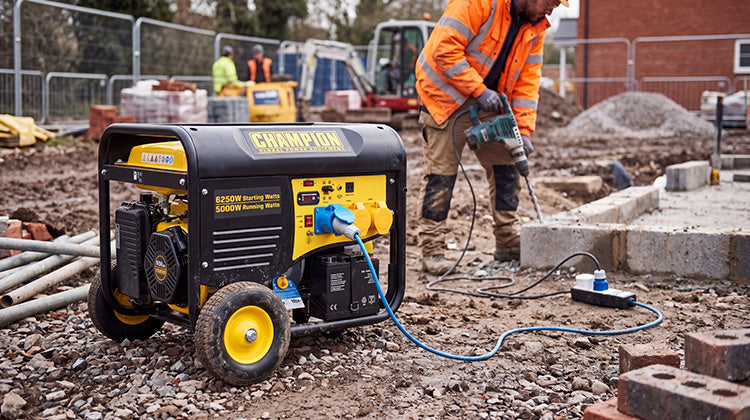
Construction sites need reliable power to keep tools running, support essential equipment and maintain productivity when mains electricity is unavailable. Whether you’re working on a residential building project, a commercial development or a remote site, the right generator can provide the electricity needed to keep work moving.
Choosing a generator for a construction site involves more than comparing maximum wattage figures. You need to consider the equipment you’ll be using, how much power it requires, how long the generator will run and whether it needs to move between locations.
In this guide, we explain what to look for when choosing a construction site generator in the UK, including generator sizing, fuel types, power requirements, portability and safe operation.
Why use a generator on a construction site?
Many construction projects take place before permanent electrical connections are available. Even when mains electricity is present, additional power may be needed for tools, machinery, lighting and site facilities.
A construction site generator can provide a practical power supply for:
- Power tools and electrical equipment
- Lighting for indoor and outdoor work
- Concrete mixers and other construction machinery
- Pumps and compressors
- Site offices and welfare facilities
- Battery chargers and temporary electrical equipment
- Emergency power during mains interruptions
For smaller projects, a portable generator may be sufficient to power essential tools and equipment. Larger developments may require a higher-output generator capable of supplying multiple machines or supporting three-phase electrical equipment.
The right choice depends on the demands of the site and the way the generator will be used.
What size generator do you need for a construction site?
Generator size is one of the most important decisions when choosing a generator for construction work. A generator that is too small may struggle to power equipment, while a model that is significantly larger than necessary can increase purchase costs, fuel consumption and transport requirements.
The first step is to identify everything that needs electrical power.
Calculate the running wattage
Running wattage is the amount of power equipment uses during normal operation. Add together the running wattage of the equipment you expect to use at the same time to estimate the generator output required.
For example, if you need to operate a 1,500W power tool and a 500W lighting setup simultaneously, the combined running load would be 2,000W.
This does not mean a 2,000W generator will necessarily be suitable. You also need to account for starting wattage.
Allow for starting wattage
Some construction equipment requires more power when it starts than it uses during normal operation. This is particularly relevant to equipment with electric motors, including pumps, compressors and some mixers.
A generator must have sufficient capacity to handle these temporary increases in demand.
If several pieces of equipment start at the same time, the starting load can be significantly higher than the normal running load. Check the power requirements of each machine and consider whether equipment will be started together or separately.
For more complex construction sites, a professional load assessment may be appropriate before selecting a generator.
Example generator sizes
The following examples show how different generator outputs may suit different types of construction work. Actual requirements depend on the equipment being used.
| Generator output | Potential construction applications |
|---|---|
| Up to 3,500W | Smaller power tools, lighting and light-duty site equipment |
| 3,500W–7,500W | Multiple tools, pumps, mixers and larger temporary power requirements |
| Above 7,500W | Higher-demand machinery, larger sites and more substantial electrical loads |
These are general examples rather than fixed equipment limits. Always check the generator’s continuous rated output and the starting requirements of the equipment you intend to run.
Petrol, LPG dual fuel or diesel generator for a construction site?
Petrol, LPG dual fuel and diesel generators can all be used for construction work, but the right fuel depends on the size of the generator, how frequently it will be used and whether portability is important.
Petrol generators
Petrol generators can suit smaller construction projects, tradespeople and temporary site work where the generator needs to be moved regularly.
Potential advantages include:
- Suitable for many portable power applications
- Available in compact and transportable formats
- Practical for intermittent use
- Suitable for powering tools and smaller site equipment
A petrol generator may be a useful option for a builder moving between jobs or working on a smaller site without a permanent power supply.
Diesel generators
Diesel generators become more relevant when higher output, longer operating periods or sustained power demands are involved.
They can be suitable for larger construction sites, heavier equipment and applications where the generator is expected to run for extended periods.
When choosing a diesel generator, consider the fuel tank capacity, expected runtime, fuel consumption and access for refuelling.
Diesel is not automatically the right choice for every construction site. A compact building project with a few portable tools may have very different requirements from a large commercial development using several machines throughout the working day.
LPG Dual-fuel generators
LPG dual-fuel generators can run on petrol or LPG, giving construction businesses greater flexibility over their fuel supply.
This may be useful where LPG is already used on site or where having an alternative fuel option is important. See the many benefits LPG has in our “Why Choose Dual Fuel” blog. However, check the generator’s rated output on both fuels, as some models produce less power when running on LPG.
Do you need a single-phase or three-phase generator?
The type of electrical supply is another important consideration when choosing a generator for a construction site.
Single-phase generators
Single-phase generators can supply many common construction tools, appliances and smaller electrical loads.
They may suit projects using equipment such as:
- Power tools
- Lighting
- Battery chargers
- Small pumps
- Site office equipment
If your equipment only requires a single-phase supply, a suitable single-phase generator may be all you need.
Three-phase generators
Three-phase generators are used where equipment requires a three-phase electrical supply. This can include larger motors, machinery and certain industrial or commercial construction equipment.
Before choosing a three-phase generator, check the electrical requirements of the equipment you intend to use.
The total rated output of a three-phase generator is not necessarily available from a single socket or one phase. How the load is distributed across the phases is important, particularly when multiple machines are operating at the same time.
For complex three-phase installations, the generator and electrical load should be assessed together by a suitably qualified professional.
Portable or stationary construction site generator?
The location and layout of your construction site will influence the type of generator you need.
Portable generators
Portable generators are useful for construction projects where power needs to be supplied in different locations.
For example, a builder may need to move a generator between a garage renovation, an extension project and an outdoor work area.
When comparing portable generators, consider more than weight and power output. Wheels, handles, dimensions and lifting points can all affect how easy the generator is to transport and position.
A generator that is technically powerful enough for the job may still be impractical if it is difficult to move around the site.
Stationary generators
Larger construction sites may benefit from a generator that remains in one location and supplies power to several areas.
A stationary setup can be suitable where the generator needs to operate for longer periods or support a more substantial electrical load.
The installation must account for ventilation, access, positioning, servicing and the electrical requirements of the equipment being powered.
How long will a construction site generator run?
Generator runtime is an important factor when choosing a model for regular construction work.
A generator’s advertised runtime is normally measured at a specified percentage of its load. For example, a runtime figure at 50% load may not reflect how long the generator will operate when it is running close to its rated capacity.
For construction sites, consider:
- How many hours the generator will run each day
- The typical electrical load during operation
- Fuel tank capacity
- Fuel consumption
- How often the generator will need refuelling
- Whether the generator can be stopped safely for refuelling
A generator with a large fuel tank is not necessarily the best option if it consumes more fuel than a smaller, suitably sized model.
The aim is to choose a generator that can support your working pattern without unnecessary interruptions.
What about generator noise on a construction site?
Construction sites can be noisy environments, but generator noise may still matter depending on where the equipment is being used.
Noise should be considered when a generator is operating:
- Near residential properties
- Close to neighbouring businesses
- Around site offices and welfare facilities
- In enclosed or partially enclosed working areas
- Near employees who may spend long periods close to the generator
Compare published noise figures carefully. The distance used for measurement and the generator’s operating load can affect the reported dBA level.
An enclosed generator may help reduce operating noise compared with an open-frame model. However, the generator still needs to be positioned and operated appropriately.
Using a generator safely on a construction site
Generators should be operated in accordance with the manufacturer’s instructions and the requirements of the site.
Before using a generator, make sure the equipment is suitable for the intended load and that electrical connections are appropriate for the environment.
Important considerations include:
- Positioning the generator in a suitable location
- Ensuring adequate ventilation
- Keeping the generator away from combustible materials
- Protecting cables from damage and trip hazards
- Using suitable electrical distribution equipment
- Checking plugs, leads and connections before use
- Following the manufacturer’s operating instructions
- Arranging appropriate inspection and maintenance
A generator should never be used in an enclosed area where exhaust fumes can accumulate. Portable generators produce carbon monoxide, which is dangerous and can be fatal.
For more complex site electrical systems, installation and connection should be carried out by a suitably qualified professional.
Generator maintenance for construction sites
Construction sites can be demanding environments for equipment. Dust, dirt, vibration and frequent movement can all affect how a generator performs.
Regular maintenance helps keep the generator reliable and reduces the risk of unexpected problems during use.
Depending on the model, maintenance may include checking:
- Engine oil
- Air and fuel filters
- Starting battery
- Fuel system
- Spark plugs on petrol generators
- Coolant where applicable
- Cables and electrical connections
- General condition and leaks
Follow the servicing schedule for the specific generator and keep track of operating hours.
If the generator is moved between sites regularly, inspect it for damage before each use. Pay particular attention to the casing, wheels, handles, cables and connections.
How to choose the right generator for your construction project
Before purchasing a construction site generator, consider the following questions:
What equipment needs power?
List the tools, machinery, lighting and site facilities that the generator will need to support.
How much power does the equipment require?
Check running wattage and starting wattage, particularly for equipment with electric motors.
Will everything run at the same time?
The generator needs to support the combined load of equipment operating simultaneously.
Does the equipment need single-phase or three-phase power?
Check the electrical requirements before choosing the generator.
How often will the generator move?
Consider portability, weight, dimensions and handling requirements.
How long will it run each day?
Look at runtime, fuel consumption and refuelling access.
Where will it operate?
Consider ventilation, noise, positioning and access for maintenance.
Will the generator be used every day or only occasionally?
Regular site power and emergency backup may require different generator specifications.
Find a generator for your construction site
Choosing the right generator for a construction site starts with understanding the work it needs to support.
For smaller projects, a portable petrol generator may provide the flexibility needed to power tools and temporary equipment. Larger sites may require a higher-output diesel generator, particularly where sustained operation or heavier electrical loads are involved.
The important thing is to match the generator to the equipment, electrical load and working conditions rather than choosing a model based on maximum output alone.
At Bimson Power, we supply generators for a range of applications, from portable power for tradespeople to larger generators for commercial and industrial use.
If you’re unsure which generator is right for your construction project, use our chat system by entering details of the equipment you need to run and how the generator will be used and we will help you narrow down the options based on your power requirements.


